Birds and birdwatching from the Alquería

Celebración del Día Mundial de las Aves el pasado 3 de octubre

“This day was celebrated by Alquería de Morayma with a beautiful walk in the valley of the river Guadalfeo. The eleven participants with different nationalities, were guided by Gary, a very enthusiastic and knowledgeable naturalist and Antonio J. Ramos, guide of the Natural Park Sierra Nevada. Anita of Casa Rural El Paraje and Carmen of the Alquería also participated.

The morning started clear and pinkish but turned windy. The day was blessed by birds of prey. The first birds that were sighted was a pair of Golden Eagles while setting off.

Read more Celebración del Día Mundial de las Aves el pasado 3 de octubre

  • Print
  • del.icio.us
  • Facebook
  • Google Bookmarks
  • email
  • Meneame
  • MySpace
  • Netvibes
  • PDF

III Censo de aves de la Alpujarra desde la Alquería de Morayma

OTOÑO 2010

El próximo 3 de octubre de 2010 va a celebrarse la tercera edición del Censo de aves de la Alpujarra promovido por la Alquería de Morayma que recoge el relevo de veinte años de avistación de aves que han realizado Miranda y Trévor por la zona de Mecina Bombarón, Cádiar y la Contraviesa.

La Sierra Nevada es un paraíso para la observación de aves, una encrucijada entre norte, sur y oeste, en donde numerosas y variadas especies pueden ser observadas desde este especial microcosmos con diversidad de zonas al alcance como la alta montaña, semidesiertos, tierras húmedas, huertos o acantilados: encontramos especies como el escribano, el picogordo, el cárabo y el chotacabras gris. A nivel oficial, la zona está declarada como ZEPA o lugar de especial protección de aves y forma parte de la Red natura 2000.

Fue el pasado otoño del 2009, el tres de octubre coincidiendo con el día internacional de las aves, cuando celebramos el primer censo en un recorrido circular desde la Alquería de Morayma hasta Lóbras. En esta ocasión se pudieron disfrutar, tras una semana de lluvias y ambiente fresco, de un total de 33 especies, siendo el pájaro estrella el Esmerejón o Falco Columbarius, ave migratoria difícil de encontrar por la zona.

En la primavera de 2010, el 18 de abril, hicimos el segundo censo amaneciendo un día lluvioso tras dos fuertes tormentas del día anterior. En esta fresca ocasión se reconocieron un total de 37 especies de las cuales pudimos añadir a la lista el mosquitero común, el avión roquero y la golondrina daúrica, siendo el pájaro rey de la jornada el Picogordo o Coccothraustes de la familia de los fringílidos.

El recorrido:

La ruta a seguir tiene una longitud de unos nueve km que se pueden hacer al ritmo pausado que requiere la observación en unas cinco horas.

Desde la explanada de la Alquería de Morayma, en el lugar del encuentro, subimos a la parte alta de la finca y seguimos la loma Cayón  entre viñas, almendros e higueras por una pista. Continuamos bajando hasta el río Guadalfeo ya entre encinas, jaras y retamas por una veredilla que parte de una pequeña alberca. Tras pasar la venta del Buen Humor, antiguo molino de aceite rodeado de olivos, y cruzar el río, nos introduciremos en el curso de Albáyar rambla arriba hasta que en ella desemboca otra pequeña rambla a la izquierda. A esta altura tomamos una vereda a la izquierda que nos subirá por la cuesta del Tejar hasta encontrar la era de los Llanos, al comienzo del pueblo de Lóbras.

Lo cruzamos y a la salida, en frente de la fuente del lavadero tomamos un camino a la derecha que pasa encima de la era del aliso y continúa para bajar por una loma hasta el cruce de la rambla de Albáyar.

La cruzamos y subimos cañada arriba durante unos cien metros donde aparece a nuestra derecha la vereda de la Cuesta de Cádiar que por su loma nos adentra en el valle del Guadalfeo. Entre acequias y huertas llegamos a la venta Mora, seguimos unos metros la pista hasta tomar a la derecha un caminillo cubierto de vegetación que nos lleva al río, cruzándolo y por una cuesta terminamos en la Alquería de Morayma, final de la excursión.

  • Print
  • del.icio.us
  • Facebook
  • Google Bookmarks
  • email
  • Meneame
  • MySpace
  • Netvibes
  • PDF

Birds and birdwatching from the Alquería de Morayma

Pajaros en el tinao Andalucia is a birdwatcher’s paradise where many of Western Europe’s birds can be seen. The variety of terrain is an important factor and here at the Alqueria we are within easy reach of the coast – cliffs, rocks and sandy beaches, wetlands and marsh:  scrubland and semi desert:  farmland, orchards  and gardens:  hills and alpine high mountains.
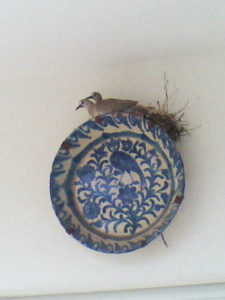
tortola-fajalauza_smallAll times of the year there are birds of interest although, of course, Spring (March – May) is generally best for seeing the widest range of species. Visits in early Spring (March -April) give one the best chance of seeing many of the winter species as well as some of the arriving migrants. Spring also has the advantage of loud birdsong which makes identification so much easier and the raptors can be seen in astonishing aerial displays. Summer can be very hot but colourful  tourists include bee eaters,  woodchat shrikes and rollers. Autumn is a good season for birding and walking and again there are plenty of birds on passage. Winter has the attraction of the wintering species including cranes, raptors and waterfowl.
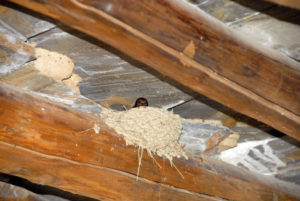
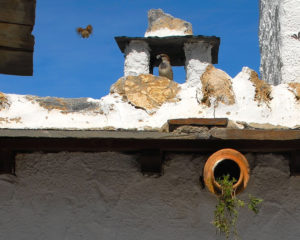
golondrinas-alqueriaBelow is a list of the birds seen within walking distance of the Alqueria in the past twenty years. If any of our guests would like more information  about the list or where to see birds please ask at reception.

S=summer Y=year round M=migrant W=winter V=vagrant

  • HERONS: Y  Grey Heron, S  White Stork
  • BIRDS OF PREY: S  Black Kite, Y  Black Vulture, M  Griffon Vulture, Y  Common Buzard, Y  Golden Eagle, Y  Bonnelli’s Eagle, Y  Short Toed Eagle, S  Booted Eagle, Y  Common Kestrel, Y  Lesser Kestrel, Y  Peregrine Falcon
  • GAME BIRDS: Y  Red Legged Partridge, Y  Common Quail
  • WADERS: V  Green Sandpiper
  • PIGEONS AND CUCKOOS: Y  Rock Dove, Y  Stock Dove, Y  Wood Pigeon, S  Turtle Dove, Y  Collared Dove, S  Cuckoo, S  Great Spotted Cuckoo
  • OWLS: S  European Scops Owl, Y  Eagle Owl, Y  Little Owl, S  European Nightjar
  • WOODPECKERS AND ALLIES: S  Pallid Swift, S  Eurasian Swift, S  European Bee Eater, S  European Roller, Y/S   Hoopoe, S  Wryneck, Y  Green Woodpecker
  • LARKS SWALLOWS AND PIPITS: Y  Calendra Lark, Y  Lesser Short Toed Lark, S  Short Toed Lark, Y  Thekla Lark, Y  Crested Lark, Y  Skylark, Y  Woodlark , W  Tawney Pipit, W  Meadow Pipit
  • WRENS AND ALLIES: Y  Grey Wagtail, S  Yellow Wagtail, Y  Pied Wagtail, Y  Dipper, Y  Northern Wren, Y  Alpine Accentor, S  Rufus Scrub Robin,
  • CHATS AND THRUSHES: Y  European Robin, S  Nightingale, S  Common Redstart, Y  Black Redstart, Y  Stonechat, S  Northern Wheatear, S  Black Eared Wheatear, Y  Black Wheatear, S  Rock Thrush, Y  Blue Rock Thrush, Y  Blackbird, S  Songthrush, Y  Mistle Thrush
  • WARBLERS AND FLYCATCHERS: Y  Letti’s Warbler , Y  Fan Tailed Warbler, Y  Dartford Warbler, Y  Sardinian Warbler, Y  Black Cap, Y  Chiff Chaff, W  Goldcrest , Y  Firecrest , S  Spotted Flycatcher, S  Pied Flycatcher
  • TITS NUTHATCHES AND TREECREEPERS: Y  Coal Tit, Y  Blue Tit, Y  Great Tit , Y  Short Toed Tree Creeper, Y  Long Tailed Tit
  • SHRIKES AND CROWS: S  Golden Oriole, Y  Great Grey Shrike, Y  Southern Grey Shrike, S  Woodchat Shrike, Y  Jay, Y  Magpie, Y  Red Billed Chough, Y  Carrion Crow, Y  Rook, Y  Raven, Y  Jackdaw, Y  Spotless Starling
  • SPARROWS FINCHES AND BUNTINGS: Y  Spanish Sparrow, Y  House Sparrow, Y  Rock Sparrow, Y  Chaffinch, Y  European Serin, Y  Greenfinch, Y  European Goldfinch, Y  Linnet, W  Siskin, Y  Common Crossbill, Y  Rock Bunting, Y  Cirl Buntin, Y  Corn Bunting

Autors: Miranda Ravetto and Trevor

  • Print
  • del.icio.us
  • Facebook
  • Google Bookmarks
  • email
  • Meneame
  • MySpace
  • Netvibes
  • PDF

Diseño y programación: CalixSierra, Contenidos: Carmen Leal, Fotografía: Paloma Brinkmman y Mariano Cruz, Traducción: Miranda Ravetto.